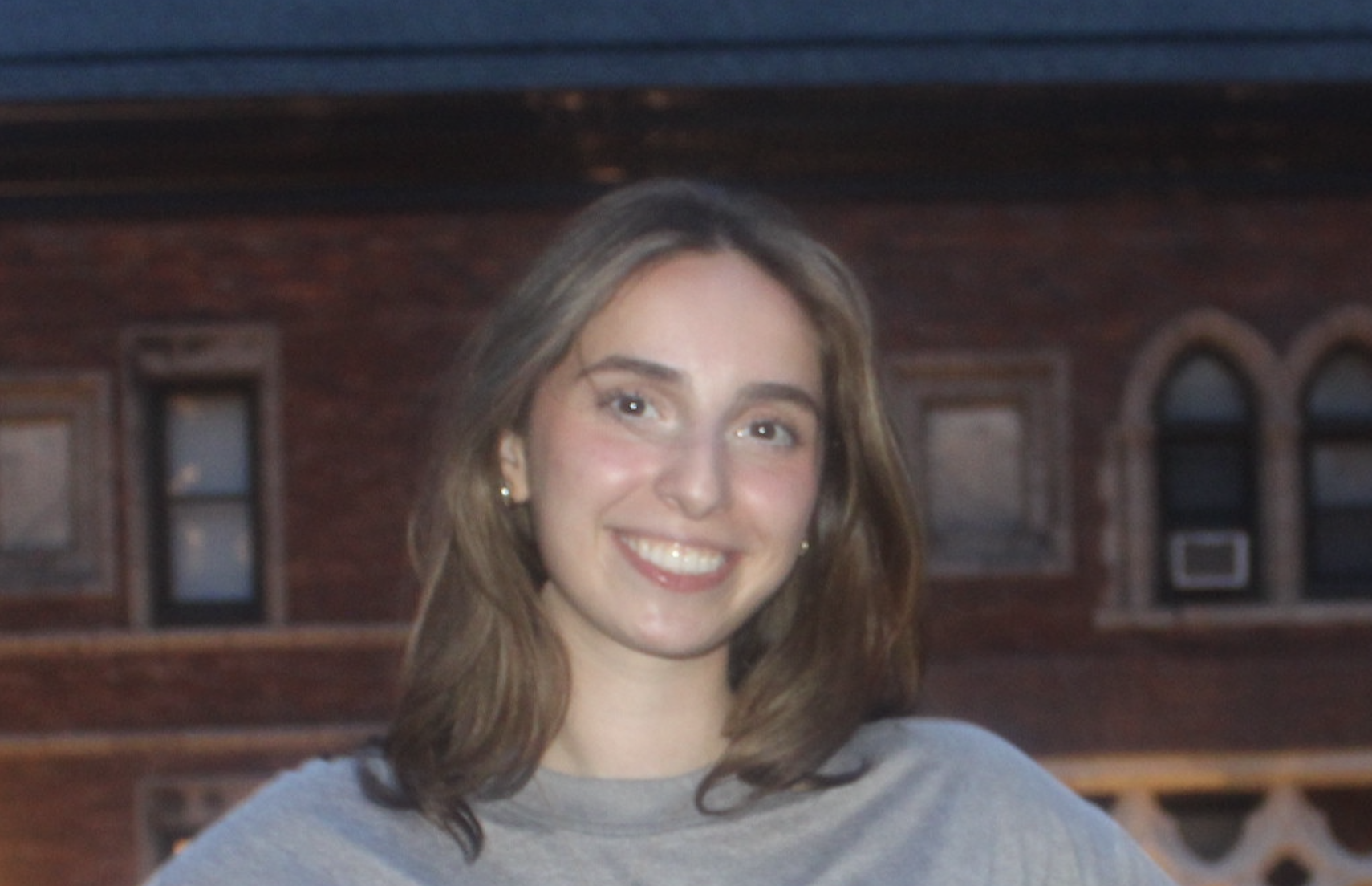
Sima Noorani
Ph.D. student at the University of Pennsylvania
Advised by
Hamed Hassani
and
George J. Pappas
I am a Ph.D. student at the University of Pennsylvania. I am also currently a Student Researcher at Google Research. My research focuses on developing rigorous statistical methodologies for reliable human-AI collaboration and trustworthy AI agents. In particular, I explore how to rethink uncertainty quantification to provide formal guarantees when humans and AI systems reason and make decisions together. Before beginning my Ph.D., I studied electrical engineering with a minor in computer science at Drexel University and interned at Lockheed Martin, Comcast, and Bristol Myers Squibb.





News & Talks
- Sep 2026 “Strategic Decision Support for AI Agents” accepted to NeurIPS 2026.
- Jul 2026 “Human–AI Collaborative Uncertainty Quantification” selected as a spotlight at the Statistical Frameworks for Uncertainty in Agentic Systems Workshop at ICML 2026.
- Jun 2026 Started as a Student Researcher at Google Research.
- May 2026 “When to Trust the Cheap Check: Weak and Strong Verification for Reasoning” accepted to ICML 2026 as a spotlight.
- Nov 2025 Here are my slides on "Uncertainty Quantification for Generative & Collaborative AI" presented at Max Planck Institute for Software Systems. slides
- Nov 2025 Here are my slides on “Human–AI Collaborative Uncertainty Quantification” presented at the Berkeley ANSR Reading Group. slides
- Oct 2025 “Conformal Prediction Beyond the Seen” accepted to NeurIPS 2025. SlidesLive
Papers
Human–AI Collaborative Uncertainty Quantification
ICML, 2026.
Spotlight at the
Statistical Frameworks for Uncertainty in Agentic Systems Workshop
at ICML 2026.
[pdf]
When to Trust the Cheap Check: Weak and Strong Verification for Reasoning
ICML 2026 (Spotlight).
Conformal Prediction Beyond the Seen: A Missing Mass Perspective for Uncertainty Quantification in Generative Models
NeurIPS 2025.
Also accepted to the R2-FM Workshop at ICML 2025.
[pdf]
Conformal Risk Minimization with Variance Reduction
UAI 2026.
Also accepted to the R2-FM Workshop at ICML 2025.
[pdf]